Blood-based extracellular vesicle biomarkers for detecting ovarian cancer earlier
Ovarian cancer is usually diagnosed late, when survival is poor, and the main blood test in use, CA-125, misses many early cancers. Extracellular vesicles (EVs) released by tumour cells carry proteins, lipids and RNA that reflect the tissue they came from, which makes them a promising source of earlier and more specific markers.
This program profiles plasma EVs from patients and matched controls to find and verify those markers:
Proteomics in pre-diagnostic samples. Using immunoaffinity-enriched EV proteomics, we have examined high-grade serous ovarian cancer in a nested case-control analysis of the UK Ovarian Cancer Population Study (Salomon et al., 2026).
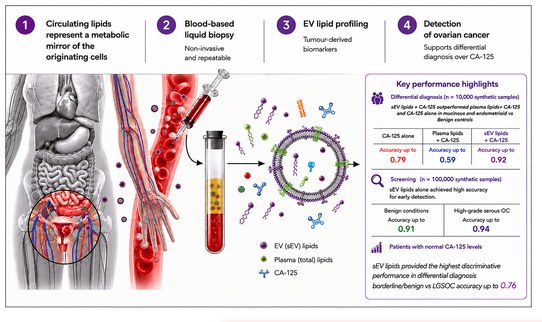
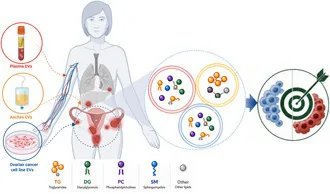
Lipidomics. Small EV and total lipid profiles outperformed CA-125 across ovarian cancer subtypes (Rani et al., 2026), and EV lipidomics reveals metabolic reprogramming in both the tumour and the host (Rani et al., 2026).
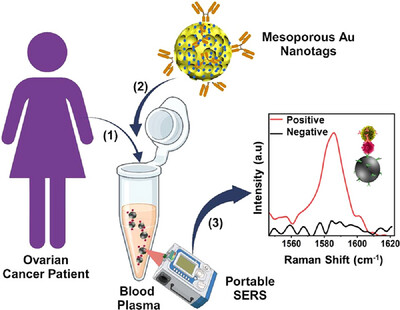
Rapid detection platforms. With materials science collaborators, we have developed mesoporous gold SERS biosensors that detect ovarian cancer-derived EVs directly (Bashir et al., 2025; Hasan et al., 2026).
Extracellular vesicle transmission of chemoresistance to ovarian cancer cells is associated with hypoxia-induced expression of glycolytic pathway proteins, and prediction of epithelial ovarian cancer disease recurrence
Mona Alharbi†, Andrew Lai†, Shayna Sharma, Priyakshi Kalita-de Croft, and 6 more authors